The Juneteenth & Me Festival
Economic, Behavioral Health & Community Impact Report
Prepared by
Princess Clark-Wendel, MBA
on behalf of H.U.E.S.
An Executive Report For
Community, Civic & Corporate Partners
Table of Contents
- 01Executive Summary & Multicultural Media ROI
- 02Year-over-Year Scaling & Trajectory
- 03Juneteenth in Prince William County: A Growing Tradition
- 04The "Road to Juneteenth" Campaign
- 05Earned Media & Thought Leadership
- 06The People's Porch
- 07Direct Financial & Tourism Output
- 08Municipal Tax Yield Analysis
- 09Community Health & Harm Reduction
- 10Partner Impact & Shared Value
- 11Culture as a Gateway to Connection
- 12Public Trust, Equity & Language Access
- 13Employee Engagement & Organizational Culture
- 14Fiscal Efficiency & Return on Investment
- 15Voices from the Festival
- 16Strategic Investment Priorities for 2027
- 17The People Behind the Impact
- 18Methodology, Data Integrity & Limitations
- 19Sources, References & Methodological Grounding
- 20About the Author
- 21Appendix — Calculation Tables & Frameworks
Executive Summary & Multicultural Media ROI
The Regional Intersection
This assessment examines the economic benefits and social returns generated by the festival and its marketing campaign. Prince William County (PWC) is one of the wealthiest, fastest-growing, and most diverse jurisdictions in the United States — ranking among the top 20 counties for income, with a median household income above $131,400, roughly 60% higher than the national average. Capturing the county's true economic and community strengths requires targeted, culturally aware outreach.
7,500
Culturally engaged attendees
Large, culturally diverse regional audience
6 Weeks
Multicultural media coalition
WPGC 95.5 · WHUR 96.3 · WLZL 107.9
$442.8K–$502.8K
Modeled economic activity
Local velocity within PWC
Media Channel Coalition Validation
The strategic deployment of a six-week promotional campaign across WPGC 95.5, WHUR 96.3, and WLZL 107.9 FM (El Zol) was a major component of the festival's regional awareness and audience-reach strategy. These legacy stations possess deep generational equity within the Washington Metropolitan Area's diverse communities.
- Cross-Cultural Market Penetration: WLZL tapped directly into the high-purchasing-power Hispanic demographic in Northern Virginia, while WPGC and WHUR activated the Black and urban consumer base — building a unified, multi-ethnic regional audience.
- Geographic Expansion: Overlapping broadcast footprints blanketed the DMV metro area, pulling bilingual, Spanish-speaking, and English-speaking families down the I-95 and I-66 corridors into Prince William County.

Year-over-Year Scaling & Trajectory Analysis
Last year, despite a passing regional rainstorm, the event drew an estimated 4,000–5,000 attendees. This year — by launching the "Road to Juneteenth" monthly business tour and expanding the media buy to a multicultural radio coalition — the festival demonstrated substantial year-over-year growth across attendance, volunteer participation, harm-reduction outreach, and modeled economic activity.
| Metric | Last Year | This Year | Growth | Strategic Context |
|---|---|---|---|---|
| Total Attendance | 4,000–5,000 | 7,500 | +50% to +87.5% | Attendance growth coincided with expansion of the multicultural media coalition to include WLZL (El Zol), alongside WPGC and WHUR. |
| Gross Direct Spending | $157.5K–$180K (4,500 × $35–$40) | $262.5K–$300K (7,500 × $35–$40) | +66.7% | Survey-informed estimate of ~$35–$40 avg. spend, not audited sales revenue. |
| Naloxone Kits | 50 kits | 144 kits (confirmed) | +188.0% | Increase of 94 kits; kits used as the consistent unit throughout. |
| System Care Referrals | 12 documented | 30 potential future CRC diversions (illustrative 10% scenario) | Not directly comparable | Documented referrals vs. a modeled future-use scenario — different measures. |
| Volunteer Participation | 38 volunteers | 102 volunteers | +168.4% | +64 volunteers strengthened operational capacity, community ownership, and cross-functional delivery. |
Quantitative growth dashboard — a full year of cultural-governance momentum.
Volunteer Mobilization
38
Volunteers last year
Prior operational baseline
102
Volunteers this year
+168.4% year-over-year
+64
Net new volunteers
Expanded community ownership
The addition of 64 volunteers expanded the festival's operational capacity, community ownership, and ability to support guest navigation, public-health outreach, vendor operations, and on-site experiences — a 168.4% increase that reflects deepening community investment in the event year over year.
From Crisis Response to Upstream Harmonization
- From emotional safety to somatic healing: last year's on-site "healing-centered presence" scaled into a proactive clinical intervention — an interactive wellness tent featuring NADA-protocol ear acupuncture as a stigma-free gateway to systemic health navigation.
- Deeper public engagement: building on 2,000 direct resident engagements, the team pivoted to deep-touch training — engaging and educating 250+ attendees and family participants and embedding public-health information within multi-generational households.
- Formalized municipal cost diversion: leveraging the new 24/7 Crisis Receiving Center on Worth Avenue and distributing 300 targeted behavioral-health and crisis-service resource materials, the event created an opportunity to model potential downstream emergency-system cost avoidance — an illustrative $107,550 cost-avoidance scenario.
Juneteenth in Prince William County: A Growing Tradition of Community Celebration
Juneteenth has been commemorated across Prince William County and its incorporated towns through community-based celebrations, civic gatherings, and local cultural programming. Over the years, residents and community organizations have created spaces to honor Black history, freedom, culture, and collective progress.
In Dale City, Tamika Joy Harris-Russell played a leadership role in community Juneteenth programming connected with the Boys & Girls Club, helping bring residents together through entertainment, cultural celebration, and neighborhood engagement. The Town of Dumfries has also hosted a longstanding Juneteenth celebration, reflecting the depth of local interest in preserving and celebrating the meaning of the holiday.
These community traditions helped demonstrate both the demand for and the value of Juneteenth programming across Prince William County. As separate celebrations and neighborhood gatherings continued to grow, there was an opportunity to build a broader Countywide platform that could connect culture with public health, economic opportunity, civic engagement, and regional visibility.
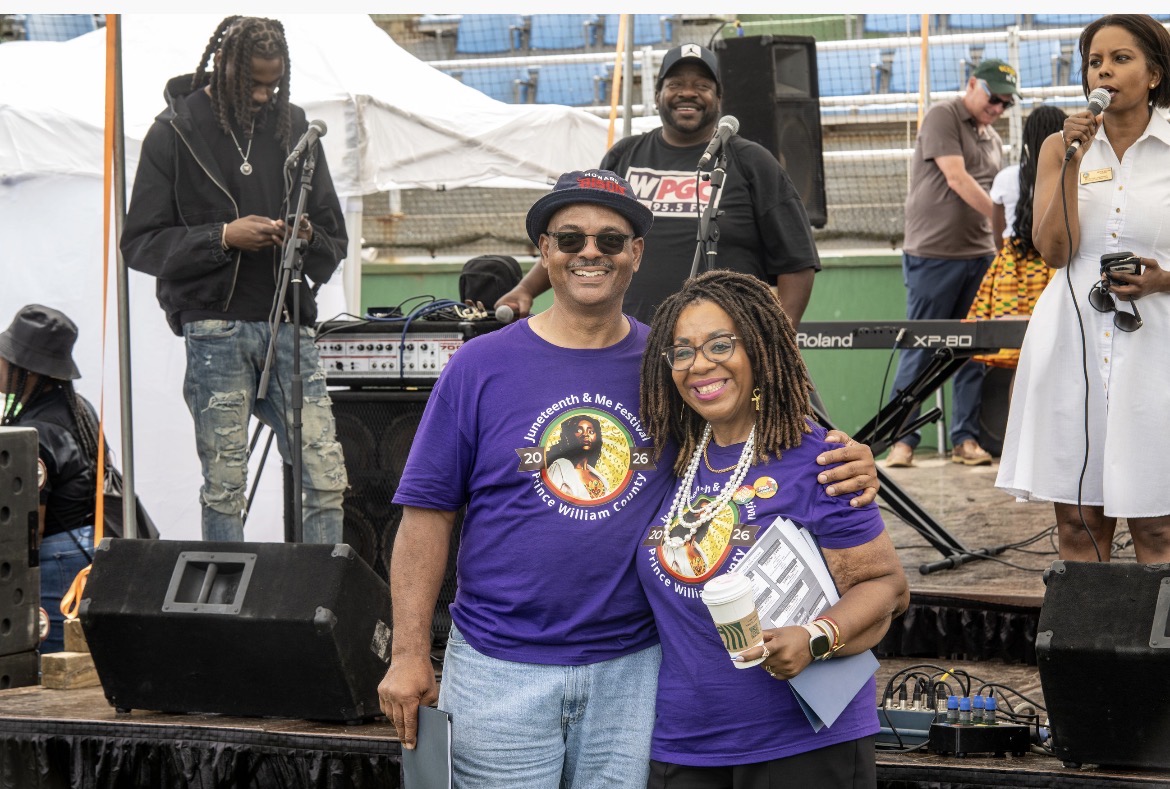
Juneteenth & Me emerged as a distinct Countywide initiative designed to build upon—not replace—the rich tradition of local Juneteenth celebrations already taking place throughout the community. By bringing together County employees, H.U.E.S., community leaders, artists, businesses, public agencies, and residents, the festival created a larger shared platform where resources, audiences, investments, and partnerships could work together at greater scale.
This collaborative approach also made practical and economic sense. The coordinated Countywide model was designed to attract larger audiences, strengthen opportunities for local and minority-owned businesses, expand access to behavioral health and County services, reduce duplication of effort, and provide community partners with a more visible platform while still honoring the unique role of neighborhood and municipal celebrations.
The "Road to Juneteenth" Campaign
The turnout of 7,500 attendees was not an isolated occurrence — it was the culmination of a semi-year-round creative marketing strategy that shifted promotion from passive, top-down advertising to active, relationship-driven community building.
- Monthly micro-activations & small-business support: rather than waiting for June, the campaign launched monthly social and shopping activations across PWC beginning January 2026.
- Stimulating the Black-owned business ecosystem: monthly gatherings hosted at local Black-owned storefronts and restaurants funneled recurring consumer traffic to minority entrepreneurs.
- Localized on-site media buys: the WPGC/WHUR/WLZL coalition ran promotional spots directly from neighborhood businesses during the events.
Anchor Corporate Alliance — The IKEA Partnership
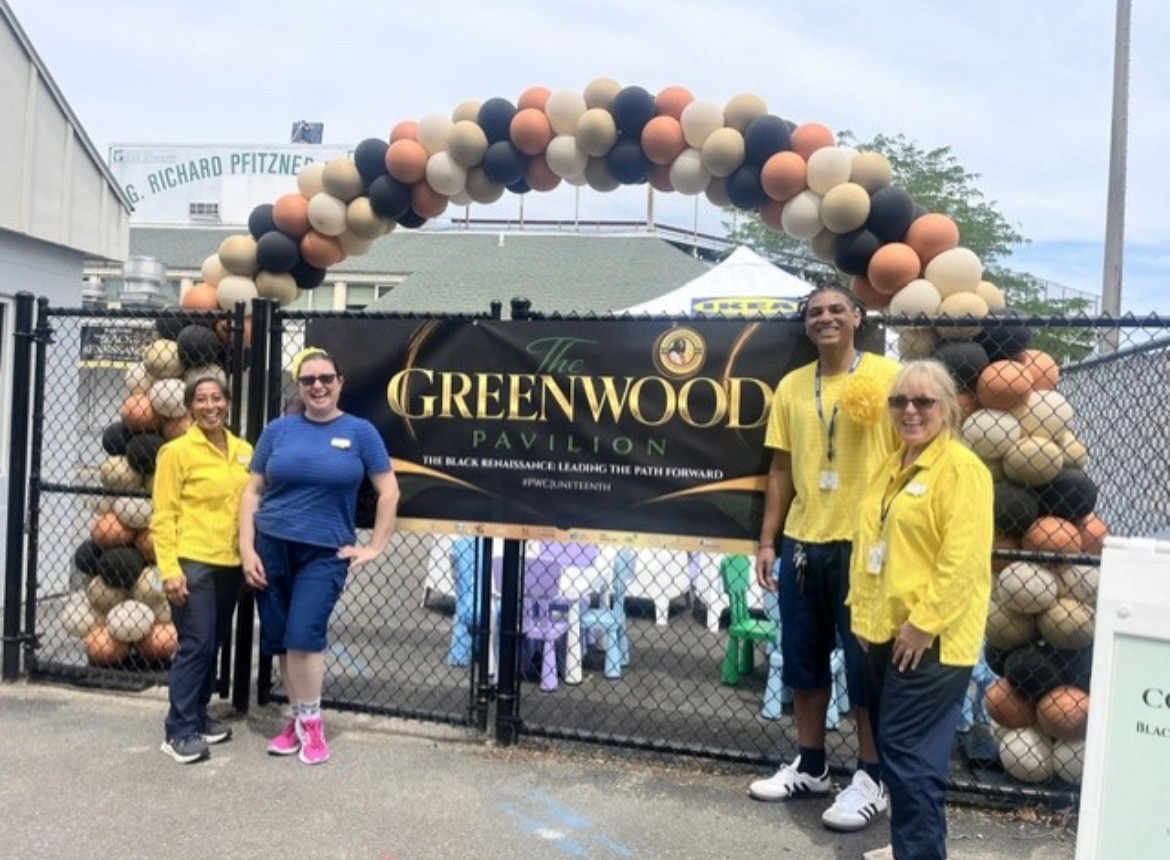
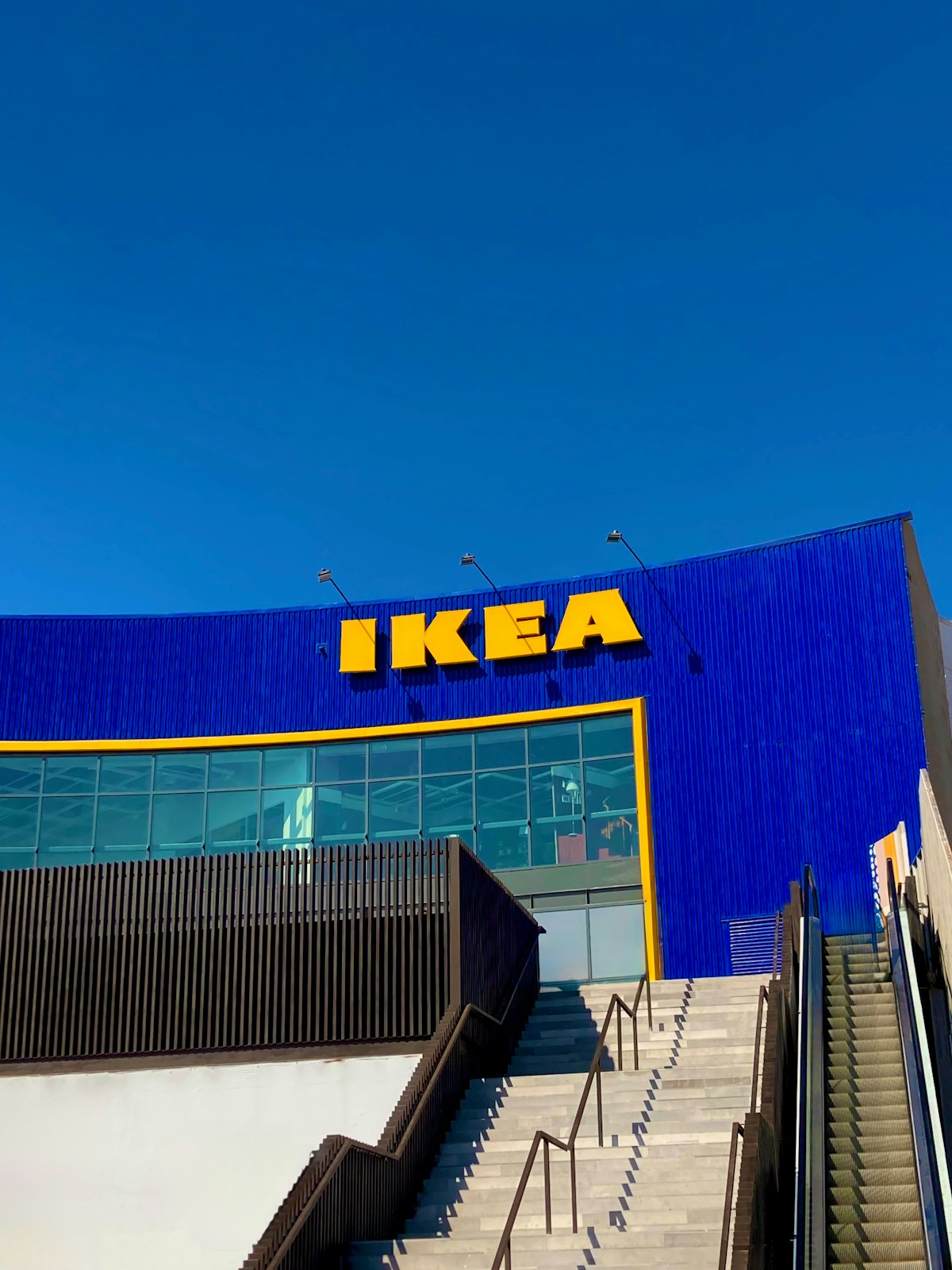
A cornerstone achievement was a strategic alliance with IKEA Woodbridge, where the "Road to Juneteenth" team co-hosted a large-scale community celebration built directly into IKEA's 40th Anniversary event — pairing municipal trust-building with regional corporate reach.
Humanizing the Municipal Workforce
A significant community-engagement outcome of the campaign was connecting Prince William County employees directly with residents in informal, relationship-centered settings. Informal, non-bureaucratic spaces broke stigma and rebuilt trust through direct, employee-to-resident relationships.

Earned Media & Thought Leadership
WHUR 96.3 FM — The Daily Drum
Beyond traditional promotional advertising, the campaign also generated earned media that extended the festival's public-health and community-wellness message. H.U.E.S. Co-Chair Princess Clark-Wendel and Prince William County Community Services representative LeNelle Mozelle appeared on WHUR 96.3 FM's The Daily Drum during a "Medical Mondays" segment to discuss the intersection of Black mental wellness, behavioral health, and Juneteenth. The conversation helped elevate culturally responsive approaches to mental health, reduce stigma, and introduce listeners to wellness resources and services connected with the festival.
Media Coverage & Regional Visibility
Juneteenth & Me received regional media coverage that expanded awareness of the festival and reinforced Prince William County's visibility as a destination for cultural celebration and community engagement.
- Prince William Times featured the second annual festival and its Black Renaissance theme, highlighting the continued growth and evolution of Juneteenth & Me.
- Patch Woodbridge previewed the festival for regional readers, highlighting its live entertainment, local talent, County and community resource booths, workshops, vendors, family programming, and fireworks finale.
- InsideNoVa provided post-event photo coverage documenting the scale, energy, attendance, cultural programming, and community experience of Juneteenth & Me.
Combined with broadcast exposure through WHUR, WPGC, and El Zol, this earned-media coverage strengthened the festival's regional visibility and extended its reach beyond paid advertising alone. Post-event coverage by InsideNoVa provided a lasting visual record of the community turnout, cultural celebration, performances, and shared experiences that defined Juneteenth & Me.
The People's Porch
Inspired by the historic role of the porch in Black communities — a place of wisdom, witness, safety, culture, and conversation — the People's Porch invited attendees to pull up, be seen, be heard, and help shape the future of their community.
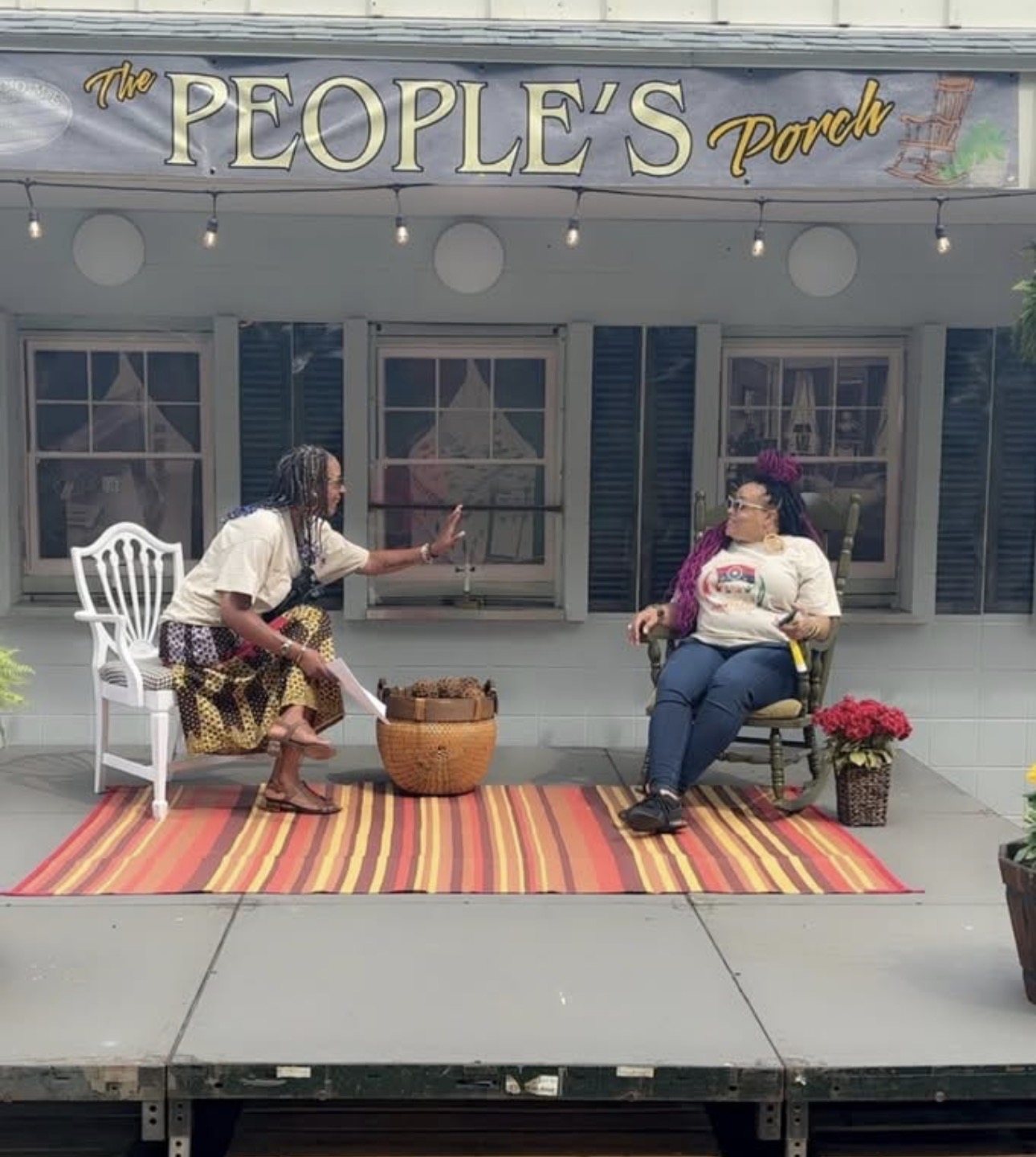
- Low-barrier civic engagement: an open, conversational design reduced the formality often associated with government meetings.
- Community voice & storytelling: residents shared experiences, concerns, hopes, and ideas in a culturally affirming environment.
- Belonging as public infrastructure: civic participation grows when residents feel culturally recognized, emotionally safe, and confident their voices matter.
Civic Voices of the People
The People's Porch transformed the historic role of the porch in Black communities into a modern civic-engagement space where residents, elected officials, community leaders, and advocates could gather for conversation, visibility, and connection. Programming included Rev. Dr. Cozy Bailey for "Meet Your Civic Leader," followed by "Supervisors on the Porch" featuring Chair At-Large Deshundra Jefferson and Supervisors George Stewart, Victor Angry, Kenny Boddye, Andrea Bailey, and Jeannie LaCroix, along with Congressman Eugene Vindman. The Porch also extended civic dialogue into economic empowerment, featuring Will Smith and Allan Johnson of AJ Realty in conversations focused on financial opportunity and community advancement. Together, these voices helped position The People's Porch as more than a festival attraction; it became a living forum for democracy, public service, representation, economic empowerment, and community belonging—bringing leadership out of formal government spaces and into direct conversation with the residents they serve.
Spending Power & Vendor Landscape
Audience Segmentation
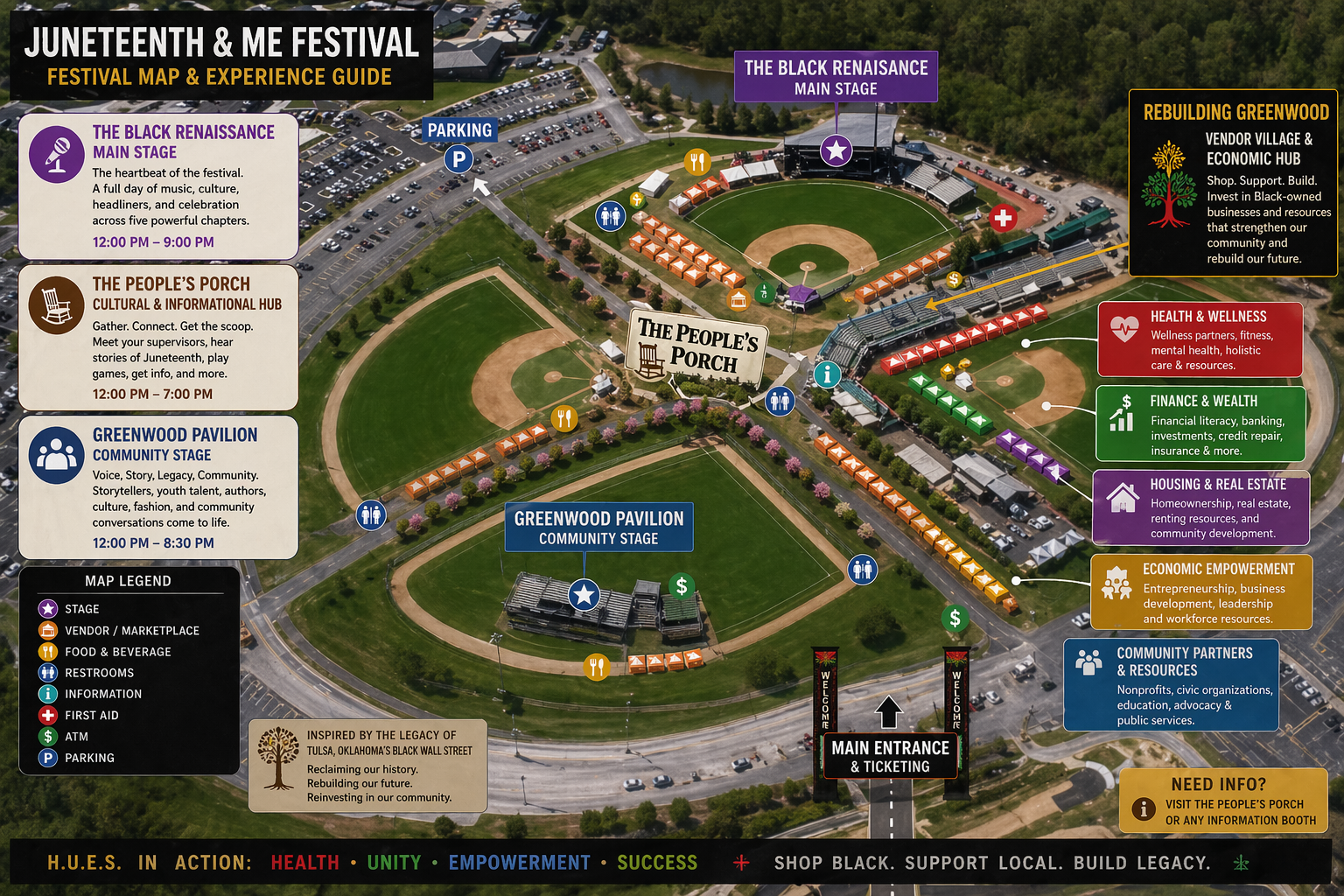
- Local residents (70% baseline): 5,250 attendees.
- Out-of-town visitors (30% baseline): 2,250 attendees.
- Observed geographic reach: a gas-card giveaway dataset showed 90.6% of participants from the DMV, with 9.4% from PA, NJ, NY, and GA.
Vendor Landscape Optimization
The festival hosted 35 food trucks and 30 corporate & professional service booths — a ratio of ~214 attendees per food truck. Estimated food-and-beverage sales ranged $262,500–$300,000, or roughly $7,500–$8,571 per truck.
Economic Impact
“This was the most income I have ever made at a festival. I definitely want to come back next year.”
The Short-Term Economic Ledger
$442.8K–$502.8K
Modeled economic activity
Total local activity
$10.5K–$12K
Illustrative local tax yield
Sales (1.0%) + meals (3.0%)
Illustrative Long-Term Commercial Opportunity
Participating housing, financial-services, real-estate, and professional-service organizations may generate longer-term economic activity through relationships initiated at the festival. Because lead volume and post-event conversions were not systematically tracked in 2026, no realized downstream transaction value is claimed in this report. Future evaluation should collect lead and conversion data to quantify this potential economic contribution.
Quantifiable Public Health Touchpoints
144
Naloxone Kits Distributed
Expanded community access to overdose-reversal medication
250+
Family Units Reached & Educated
May extend harm-reduction knowledge across household & peer networks
$107,550
Cost-Avoidance Scenario
Illustrative planning model — not realized savings
- Opioid overdose prevention: 144 naloxone kits distributed, expanding community access to overdose-reversal medication.
- Family education: 250+ family units reached and educated; education delivered to family units has the potential to extend harm-reduction knowledge across broader household and peer networks.
- Low-barrier clinical intervention: low-barrier wellness support using the NADA auricular acupuncture protocol.
Local Crisis-Care Context: Prince William County Crisis Receiving Center
The festival's behavioral-health outreach was especially timely because Prince William County now has a local, 24/7 Crisis Receiving Center providing walk-in urgent care, 23-hour observation, crisis stabilization, dedicated youth services, and streamlined first-responder access. According to operational information provided by Connections Health Solutions, the facility accepts individuals across acuity levels without requiring an appointment or referral and is designed to stabilize people in the least restrictive appropriate setting. Data reported through May 27, 2026 indicate that 41% of adults receiving urgent care or observation were discharged back to the community, while the dedicated first-responder process achieved an average law-enforcement transfer time of less than 10 minutes. These local outcomes reinforce the public value of helping residents understand when and how to use the Crisis Receiving Center rather than defaulting to hospital emergency departments or law-enforcement-centered responses.
Illustrative Emergency-System Cost-Avoidance Scenario
Partnerships That Delivered Measurable Community Value
Juneteenth & Me created measurable value through partnerships that extended beyond traditional sponsorship. Healthcare, retail, financial services, real estate, insurance, and accounting partners used the festival as a platform to deliver preventive health services, household benefits, financial engagement, and direct community incentives — a shared-value model in which residents gain access to useful resources while participating organizations build authentic relationships with the communities they serve.
Partner Health Impact: Kaiser Permanente
Kaiser Permanente joined Juneteenth & Me as a healthcare partner for the first time in 2026, expanding the festival's public-health impact through on-site biometric screening and preventive-health engagement. Sixteen individuals participated in Kaiser's screening services, including 12 non-Kaiser members — representing 75% of participants and demonstrating the festival's ability to connect residents with preventive-health resources beyond an insurer's existing membership base.
16
Community Participants Screened
On-site biometric & preventive-health screening
75%
Were Not Kaiser Members
12 of 16 participants
32
Care-Gap Interventions
Health assessment, weight, BP & social determinants
Aggregate screening results identified potential health risks warranting awareness or follow-up: 67% of those receiving blood-pressure screenings had mid-range or elevated results; 71% of A1C participants screened in the prediabetes range; 67% of cholesterol participants had results above the report's healthy range; and 70% of BMI participants were within overweight or obese screening categories. Kaiser also documented 32 care-gap interventions across health assessment, adult weight management, blood-pressure management, and social determinants of health.
Health Risk Snapshot — On-Site Screening Results
Share of blood-pressure screenings
Share of A1C screenings
Share of cholesterol screenings
Share of BMI screenings
Illustrative of a small, self-selected screening pool — not representative of the broader festival population. Individuals may appear in more than one screening category. Percentages reflect the share of participants screened in each measure.
From Screening to Support
Because participation was limited and individuals may appear across multiple screening categories, these results should not be interpreted as representative of the broader festival population. Rather, they demonstrate the value of bringing preventive screening directly into trusted community spaces, where potentially important health risks can be identified and individuals can be encouraged toward appropriate follow-up care.
Health Equity & Whole-Person Wellness
The findings are particularly relevant to the festival's broader health-equity mission because Juneteenth & Me intentionally creates culturally responsive opportunities to bring health education, prevention, behavioral health, and wellness resources into a community-centered environment.
The screening results also reinforce the value of integrating physical health and behavioral health within the festival's wellness strategy. Conditions such as hypertension, diabetes risk, weight-related health concerns, stress, and social determinants of health frequently intersect with emotional wellbeing and access to care, supporting a whole-person approach to community health.
Corporate Partner Engagement: IKEA Woodbridge
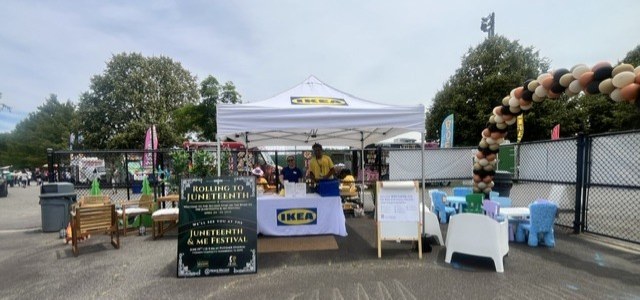
IKEA Woodbridge's participation demonstrated the reciprocal value of corporate-community partnership at Juneteenth & Me. During the festival, IKEA engaged directly with attendees and enrolled 60 guests in its customer loyalty program, creating measurable consumer engagement while strengthening its connection to the local community. IKEA also donated a summer outdoor furniture set as a festival giveaway, providing a tangible household benefit to a participating resident. Following the event, IKEA representatives reported a highly positive festival experience. The activation illustrates how Juneteenth & Me can create shared value: residents gain access to resources, experiences, and community investment, while corporate partners build authentic relationships with the diverse communities they serve.
Small-Business & Financial Empowerment Partner Activation: Gas Card Giveaway
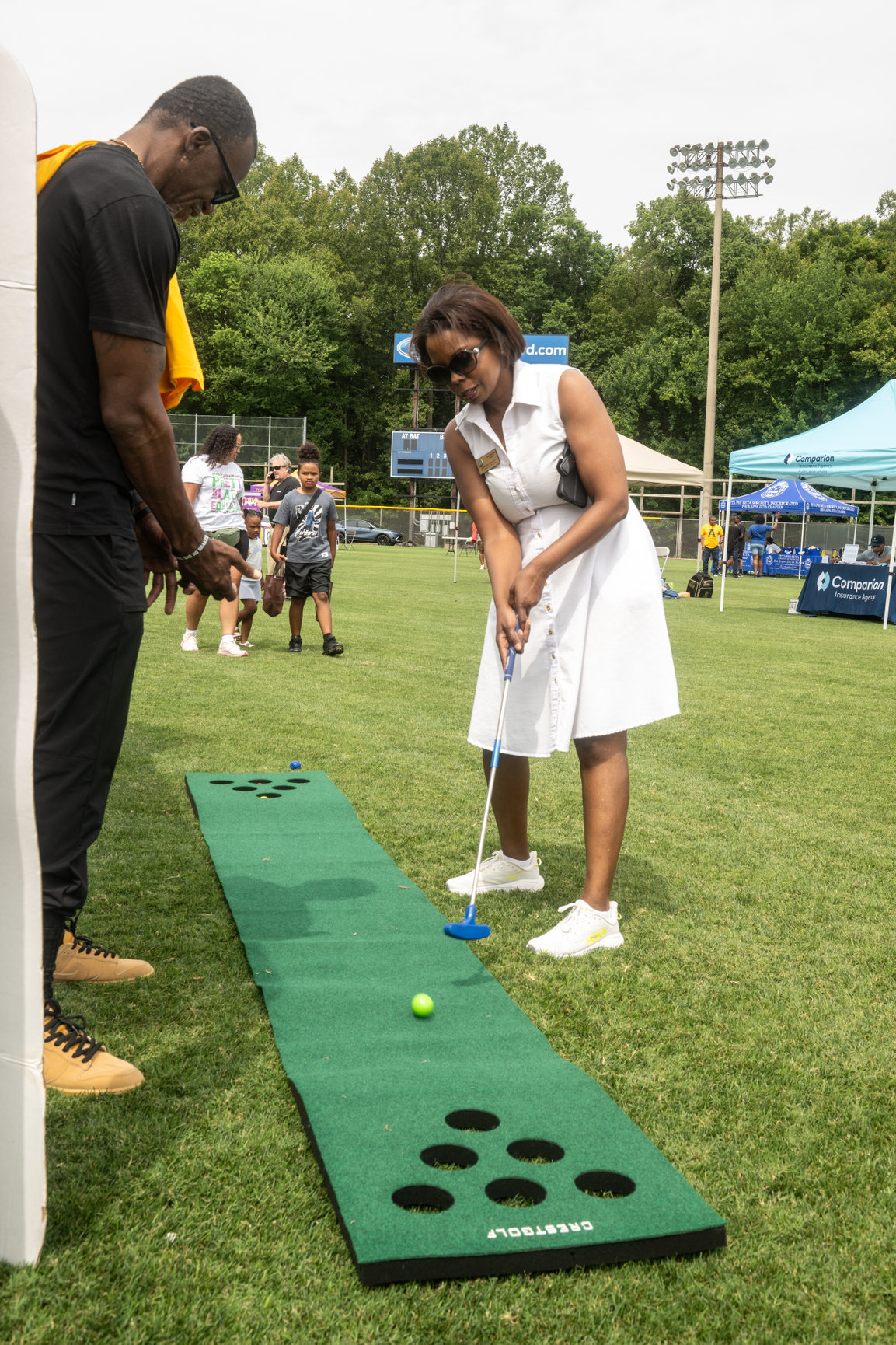
A collaborative group of sponsor partners representing financial services, real estate, insurance, and accounting transformed their festival presence into an interactive community engagement opportunity through a gas card giveaway. The activation generated 99 entries, giving participating businesses an opportunity to connect directly with festival attendees while offering a practical benefit responsive to everyday household expenses. Four gas cards were awarded to participants.
Beyond the giveaway itself, the activation brought residents into contact with professionals and businesses connected to financial wellbeing, homeownership and real estate, insurance protection, and accounting services. The strong participation demonstrates how the festival can provide local and professional-service businesses with meaningful community visibility while creating accessible, value-added experiences for residents.
Partnership in Action
Partner Impact at a Glance
| Partner / Partner Group | Activation | Documented Impact |
|---|---|---|
| Kaiser Permanente | Preventive health & biometric screening | 16 participants; 75% non-KP members; 32 documented care-gap interventions |
| IKEA Woodbridge | Community engagement & household giveaway | 60 loyalty-program enrollments; 1 summer outdoor furniture set awarded |
| Financial Services / Realty / Insurance / Accounting Sponsor Partners | Gas card giveaway & community engagement | 99 entries; 4 gas cards awarded |
Screening figures reflect a limited participant pool and are illustrative of community reach — not representative of the broader festival population.
Cultural & Community Impact
Culture as a Gateway to Connection

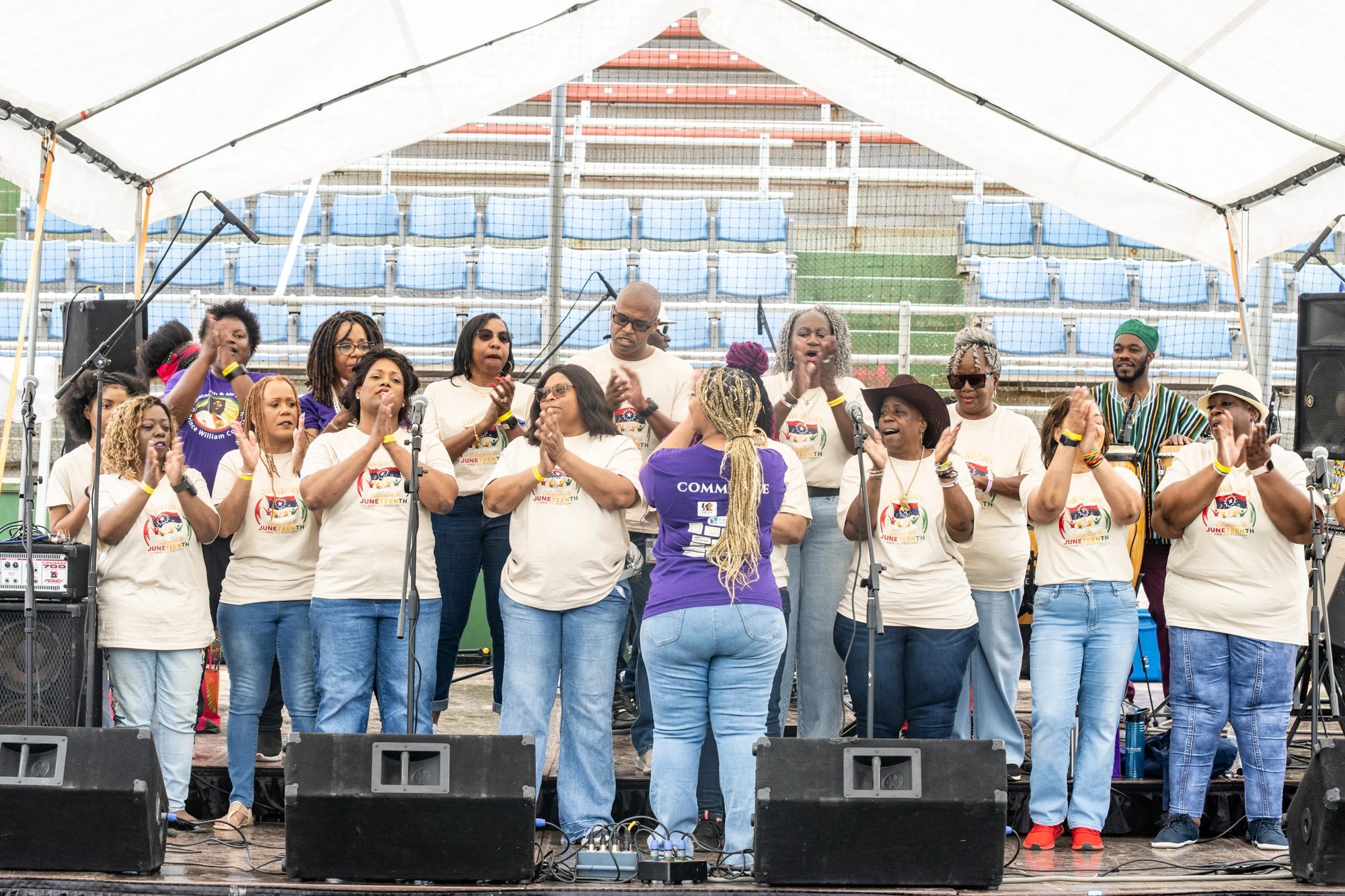
Opening with the Community Choir's rendition of "Lift Every Voice and Sing," Juneteenth & Me anchored the day in cultural memory and shared history. Across The People's Porch, the main stage, and the vendor village, the festival brought together residents of every race, culture, and background — celebrating a freedom once denied to so many and turning celebration into a shared sense of belonging.
Ancestry + Belonging
“As a Black woman, I felt an overwhelming sense of pride hearing the crowd sing along. In that moment, I felt deeply connected to my ancestors and grateful for the sacrifices that made my presence there possible.”
Community Talent, Inclusion & Participation
The Community Stage became a platform for the county's own — poets, singers, dancers, fashion designers, and performers with disabilities — showcasing the tremendous talent and diversity that exists right here in Prince William County. Community leader Tamika Joy Harris-Russell helped bring artists, performers, and community voices to the festival, strengthening its role as a stage where local talent could shine.
Local Talent + Opportunity
“We have some AMAZING people right here in our community. They just need a platform and an opportunity to shine. Juneteenth & Me gave them that stage — and they absolutely showed up and showed out.”
The Architecture of Public Trust
By running a six-week campaign on WPGC, WHUR, and WLZL, the county leveraged trusted cultural institutions to overcome bureaucratic stigma and reach communities where they already gather.
- Language access: WLZL 107.9 (El Zol) actively validated the Hispanic community's presence. According to U.S. Census Bureau population estimates as of July 1, 2025, approximately one-quarter of County residents identify as Hispanic or Latino.
- Equity in practice: multilingual outreach and culturally affirming programming ensured the festival reflected the full diversity of Prince William County.
Source: U.S. Census Bureau QuickFacts, Prince William County, Virginia (population estimates as of July 1, 2025) — census.gov/quickfacts/fact/table/princewilliamcountyvirginia/PST045225.
Employee Engagement & Organizational Culture
Workforce Dividend
The Juneteenth & Me Festival created a meaningful opportunity for employee engagement across Prince William County Government. Staff from H.U.E.S. and departments across the organization volunteered their time — including employees who contributed hours outside of their regular work schedules — to support festival operations, guest engagement, logistics, public-health outreach, programming, and community activities.
Their participation demonstrates that the festival functioned not only as a public-facing event, but also as an internal culture-building experience. Employees from different departments worked side by side around a shared purpose, strengthening cross-departmental relationships, visibility, belonging, and connection to the communities they serve.
Research consistently links stronger employee engagement with better organizational outcomes, including lower turnover, stronger retention, higher productivity, and greater employee wellbeing. Gallup reports that engaged employees tend to have better retention and lower absenteeism, while its workplace research also identifies engagement as a contributor to lower turnover. CIPD's evidence review similarly finds positive associations between employee engagement and organizational performance outcomes.
For Prince William County, opportunities such as Juneteenth & Me may therefore provide value beyond the event itself by helping employees build relationships, experience shared purpose, develop pride in public service, and feel more connected to the organization and the residents they serve. This report does not claim the festival caused improved retention; rather, it supports conditions associated with engagement and retention.
Sources: Gallup, The Benefits of Employee Engagement · CIPD, Employee Engagement and Motivation (factsheet).
A Public-Private Model That Multiplied County Resources
Based on the preliminary expense worksheet provided by Parks and Recreation, the total festival operating value is $120,170.37, consisting of County cash expenditures, interdepartmental in-kind services, and a privately funded (non-County) drone light show.
For every $1 of County cash expenditure
| Investment Component | Preliminary Value |
|---|---|
| Total festival operating value | $120,170.37 |
| County cash expenditures | $76,166.37 |
| Interdepartmental in-kind support | $24,004.00 |
| Non-County-funded contribution (drone light show) | $20,000.00 |
Preliminary Parks worksheet — not a final audited ledger. Certain County-related expenses and in-kind services remain subject to reconciliation and independent confirmation.
Illustrative Combined Public Value
| Value Measure | Estimated Range | Basis |
|---|---|---|
| Modeled economic activity | $442,800–$502,800 | Vendor-informed spending × 1.60 multiplier |
| Illustrative local tax yield | $10,500–$12,000 | Shown separately; not added (avoids double-count) |
| Emergency-system cost avoidance | $107,550 | Illustrative scenario: 30 potential diversions |
| Illustrative combined public value | $550,350–$610,350 | Economic activity + cost avoidance |
Return Ratios
- Economic activity: ~$3.68 to $4.18 for every $1 of total operating value.
- Economic activity: ~$5.81 to $6.60 for every $1 of County cash expenditure.
- Combined public value: ~$4.58 to $5.08 for every $1 of total operating value.
- Combined public value: ~$7.23 to $8.01 for every $1 of County cash expenditure.
Conservative takeaway: using the lower bound of the modeled range, the festival generated approximately $4.58 in combined public value for every $1 of total operating value, and approximately $7.23 for every $1 of County cash expenditure — a substantial modeled return even under this more conservative cost basis.
Voices from the Festival
Three voices capture the festival's impact across culture, community, and the local economy — brought together here as a concise recap of what Juneteenth & Me meant to the people who lived it.
Ancestry + Belonging
“As a Black woman, I felt an overwhelming sense of pride hearing the crowd sing along. In that moment, I felt deeply connected to my ancestors and grateful for the sacrifices that made my presence there possible.”
Local Talent + Opportunity
“We have some AMAZING people right here in our community. They just need a platform and an opportunity to shine. Juneteenth & Me gave them that stage — and they absolutely showed up and showed out.”
Economic Impact
“This was the most income I have ever made at a festival. I definitely want to come back next year.”
More Voices from the Community
"I volunteered last year. I had to watch my grandson this year, so I could not volunteer. I did not think you could top last year's festival, but you did. This festival was even better. I told others about it and brought my daughter."
"Thank you very much for the opportunity to participate in the festival. It was an incredible program. My family and I enjoyed ourselves, and we hope we can participate again in the future."
Scaling Municipal Infrastructure — Recommended Action
- Plan proactively for 10,000 attendees: expand footprint, vendor capacity, sanitation, and clinical/safety staffing to safely accommodate projected crowd growth.
- Establish dedicated capacity: evaluate dedicated event and community-engagement staffing capacity, including a centralized full-time position or equivalent operating model.
- Expand the behavioral-health & civic footprint: formalize The People's Porch as a signature civic-engagement platform.
- Strengthen measurement & evaluation: standardized vendor sales surveys and attendee ZIP-code collection to move from modeled projections to audited outcomes.
- Formalize volunteer management & recognition: with volunteer participation up 168.4%, build a centralized plan for roles, orientation, scheduling, supervision, and post-event recognition to sustain community ownership.
Recommended Action & Investment
Partnership Acknowledgments
The Juneteenth & Me Festival and Road to Juneteenth campaign were made possible through cross-departmental collaboration, public-private partnership, community sponsorship, and the commitment of public servants and volunteers. H.U.E.S. extends its deepest appreciation to the following partners:
Department of Parks and Recreation
Operational partnership, site coordination, logistics, and stewardship of public spaces.
Office of Equity and Inclusion
Partnership in advancing inclusive community engagement.
Susan Washington & PWC Human Resources
Sponsorship and essential support.
Office of Procurement
In-kind support and meaningful on-site participation.
Facilities & Fleet Management
Transportation, equipment, facility, and logistical assistance.
Prince William Public Libraries
Community outreach, educational engagement, and trusted neighborhood networks.
Department of Housing
Connecting residents with housing information.
Department of Social Services
Linking individuals and families with essential supports.
Prince William County Community Services
Critical behavioral health and harm-reduction services.
Office of Executive Management's Office of Communication & Engagement
Strategic communications, media coordination, and community engagement.
Office of Youth Services
Youth engagement, programming, and vendor-relations support.
The People Behind the Impact
H.U.E.S. Leadership, Juneteenth & Me Volunteer Committee, and Community Partners. The Juneteenth & Me Festival was powered by people who gave their time, expertise, creativity, relationships, and service to build something larger than a single event. H.U.E.S. recognizes the leadership team, volunteer committee members, County employees, interns, and community partners whose collective work transformed a vision into a regional platform for cultural celebration, behavioral health outreach, economic empowerment, civic engagement, and community joy.
H.U.E.S. Executive Leadership Team
Princess Clark-Wendel
H.U.E.S. Co-Chair · PWC Community Services
Captain Willie Hardiman
H.U.E.S. Co-Chair · Commander, Court Services Division, PWC Sheriff's Office
Ashley Spears
Communications & Engagement Lead · HIPAA Compliance Officer, PW Area Agency on Aging
Executive Sponsor / County Leadership Support
Elijah Johnson
Executive Sponsor · PWC Office of Executive Management
Juneteenth & Me Volunteer Committee
Domonique Ward
Volunteer Chair · PWC Dept. of Public Works
LeNelle Mozelle
Logistics & Facilities Co-Chair · PWC Dept. of Community Services
Kesha Beckley
Children's Entertainment · PWC Dept. of Public Safety
Kortnie Williams
Soulful Sweets Bake-Off Chair · PWC Dept. of Community Services
Patrice Summers
Public Partnerships & People's Porch Host
Frederick Dankwa
Print & Production · PWC Print Shop
Maria Burgos (Retired)
Office Sponsor · PWC Office of Equity & Inclusion
Susan Washington
Department Sponsor · PWC Dept. of Human Resources
Shana Terry
Department Sponsor · PWC Office of Procurement
Byron Jenkins (Retired)
Safety Co-Chair & Community Partner
Kala Washington
Marketing Support · PWC Office of Equity & Inclusion
Mellissa Cheema
Vendor Relations Co-Chair · PWC Office of Youth Services
Community Partners
Tamika Joy Harris-Russell
Artist & Performance Chair, Community Lead · STARS, Inc.
Rev. Dr. Cozy Bailey
Civic Community Partnership Chair · NAACP
Darryl Hairston
Community Sponsorship & Partner Engagement · George Hampton Foundation
Jeffery Allen
Community Sponsorship & Partner Engagement · George Hampton Foundation
Victoria Provencal
Marketing · 1Stop Business and Personal Solutions, LLC
Pebbles Spearman-Drummond
Stage Manager · Stars
Capriece Piper
Community Partner · Marketing
Special Thanks
Valeria Veliz-Vargas
Sophia Adame
Olivia Greene
Chris Chesire
Seth Hendler-Voss
Nikki Brown
Shane Spears
Evelyn Galindo
Shanelle Harris
Christina Damhuis
Desiree Gonzalez
Rickie Hardy
Kevin Jenkins
Crystal Wilhoit
Camillya Jones
Jessica Medeiros
Francis Allen
Jennifer Dakes
Kalisha Spence
Brian Lanzas
About Tamika Joy & Community Partnership
Tamika Joy Harris-Russell served as a key community partner and entertainment co-chair for the Juneteenth & Me Festival. She brought deep community relationships, artistic leadership, and cultural programming expertise to the event, helping curate performers, engage local artists, elevate community talent, and support the Community Choir. Her contributions helped create an energetic, inclusive festival experience that reflected the richness and diversity of Prince William County's Black community.
Prince William County Community Services PR Committee
H.U.E.S. extends appreciation to the Prince William County Community Services PR Committee for its communications, storytelling, promotional, creative, and public-engagement support. Committee members helped strengthen festival visibility, develop audience-centered experiences, and advance the behavioral health and community-impact narrative surrounding Juneteenth & Me.
Alyssa Larsen
Community Services PR Committee — provided significant creative and planning support for The People's Porch, helping shape the space as an inviting platform for civic dialogue, community voice, cultural reflection, and belonging.
Jordan Singleton
Brought youth creativity to the heart of the festival. Her winning Juneteenth & Me student logo was selected for the official festival T-shirt, and she helped create the shutter-window elements featured in The People's Porch installation — demonstrating how young people can shape the visual identity and cultural meaning of a major community celebration.
Heidi Cruz
PWC Department of Finance — provided valuable marketing support that strengthened festival outreach and visibility.
Photography and Visual Documentation
The festival's story was preserved through the work of volunteer professional photographers who captured the joy, culture, partnerships, and community impact of Juneteenth & Me. Their photographs serve as a vital visual record of the event, inspiring future storytelling, reporting, outreach, and historical documentation.
Osbert “Bert” Cush
Owner, Cush Art Photography
Tony Turnage
Owner, Blu Pearl Photography
Youth Photography and Videography
Adana Hundley and Austin Charity, students from Prince William County Schools, volunteered as photographers for the festival, skillfully capturing images and videos of the event. Their contributions highlight the powerful role of youth in preserving community history and shaping the inspiring narrative of the Juneteenth & Me initiative.
Methodology, Data Integrity & Limitations
This report distinguishes among three categories of information:
- Observed or Reported Outputs — attendance estimates, volunteer participation, naloxone kits distributed, family units reached, brochures distributed, vendor participation, and other documented festival activities.
- Financial Information — preliminary expenditure and in-kind contribution information provided by participating Prince William County departments and partners. Where figures remain subject to reconciliation or independent confirmation, they are identified accordingly.
- Modeled Scenarios — economic multipliers, estimated attendee spending, local tax yield, potential emergency-system cost avoidance, and other prospective impacts calculated using stated assumptions. These scenarios are presented for planning and evaluation purposes and do not represent audited revenues, confirmed savings, or guaranteed future outcomes.
This report has been developed using a comprehensive range of sources, including operational data from the festival, information provided by partners, vendor feedback, attendance estimates, public health outputs, and financial data from the relevant County departments involved. Furthermore, it incorporates well-defined assumptions pertaining to economic and public value modeling. Throughout the document, distinctions between modeled estimates and observed or confirmed results are clearly articulated.
Sources, References & Methodological Grounding
Methodological Note on Data Credibility
This report combines observed festival outputs, preliminary financial information, governmental guidance, peer-reviewed research, and clearly identified scenario assumptions. External economic and behavioral-health literature provides context for the analytical framework but does not independently establish Prince William County–specific outcomes. Accordingly, estimated economic activity, tax yield, future service utilization, emergency-system cost avoidance, and other prospective effects are presented as illustrative planning scenarios, not audited revenues, confirmed savings, or guaranteed future results.
I. Regional Economic Impact & Municipal Taxation
Regional Input-Output Methodology. The report applies standard regional input-output principles to estimate how initial attendee spending may circulate through a local economy. The U.S. Bureau of Economic Analysis Regional Input-Output Modeling System, or RIMS II, estimates the effects of changes in final demand on regional output, earnings, and employment. These effects include direct activity and subsequent economic activity generated through local supply chains and household spending.
Illustrative 1.60 Tourism Multiplier. A 1.60 output multiplier was applied to estimated direct attendee spending as a conservative planning assumption. This means that every $1.00 in direct spending is modeled as generating approximately $1.60 in total regional economic activity through:
- Direct effects: initial attendee purchases from vendors and businesses;
- Indirect effects: subsequent business-to-business purchasing within the supply chain; and
- Induced effects: household spending supported by wages associated with that economic activity.
A USDA Forest Service review of recreation and tourism impact studies found that IMPLAN-based state tourism analyses generally reported Type II sales multipliers ranging from 1.5 to 1.8. The selected 1.60 coefficient falls near the lower end of that published range and is intended to recognize secondary economic activity without assuming unusually high local retention. It has not been independently calibrated through a Prince William County–specific RIMS II or IMPLAN model.
The Asian Development Bank has also documented substantial variation in tourism income multipliers across destinations, illustrating that multiplier size depends on local supply-chain capacity, economic structure, and the degree to which spending remains within the destination economy.
Prince William County Food and Beverage Tax. Prince William County imposes a 3% tax on qualifying prepared food and beverage sales effective January 1, 2026. Any local tax-yield estimate presented in this report is illustrative and should be applied only to the portion of modeled spending reasonably attributable to taxable prepared food and beverage purchases.
II. Behavioral Health Crisis-Care Framework
Specialized Crisis Facilities and Community-Based Diversion. Balfour and Zeller describe how specialized crisis facilities and community-based crisis systems can provide alternatives to traditional emergency-department and law-enforcement-centered responses. Their work supports the report's broader rationale for connecting residents with the Prince William County Crisis Receiving Center and other lower-barrier behavioral-health resources. The article does not independently establish the specific local ambulance, emergency-department, or law-enforcement unit costs used in this report.
Balfour, M. E., & Zeller, S. L. (2023). Community-Based Crisis Services, Specialized Crisis Facilities, and Partnerships With Law Enforcement. Focus, 21(1), 18–27. DOI: 10.1176/appi.focus.20220074.
The projected utilization of Crisis Receiving Centers at 10% is an illustrative planning assumption. It should not be interpreted as a documented treatment-engagement rate associated with the festival.
Connections Health Solutions. Prince William County Crisis Receiving Center Complex: Bringing the Highest Fidelity of SAMHSA's National Guidelines to Virginia. Presentation dated June 2, 2026; operational data reported through May 27, 2026. Used to describe the local Crisis Receiving Center model, access pathways, service capacity, first-responder process, and reported operational outcomes. These data provide local context for the report's diversion rationale but do not independently validate the festival's modeled 10% future-utilization assumption or the specific dollar value assigned to each hypothetical diversion.
III. Trauma-Informed Community Engagement
Six Guiding Principles of a Trauma-Informed Approach. The festival's wellness and civic-engagement environments were informed by federal trauma-informed principles emphasizing:
- Safety;
- Trustworthiness and transparency;
- Peer support;
- Collaboration and mutuality;
- Empowerment, voice, and choice; and
- Cultural, historical, and gender considerations.
These principles provide a framework for creating low-barrier public spaces in which residents can engage with behavioral-health information, community leaders, and service providers in ways that promote dignity, belonging, and personal agency.
Centers for Disease Control and Prevention and Substance Abuse and Mental Health Services Administration. Six Guiding Principles to a Trauma-Informed Approach.
IV. Naloxone Distribution & Overdose Education
Bystander Naloxone and Overdose Response. A meta-analysis by Giglio, Li, and DiMaggio found that bystander naloxone administration was associated with substantially increased odds of overdose recovery and that overdose-education programs improved participants' knowledge of appropriate overdose response. This evidence supports the public-health value of expanding community access to naloxone and overdose education. It does not establish that a specific percentage of kits distributed at Juneteenth & Me will subsequently be used.
Giglio, R. E., Li, G., & DiMaggio, C. J. (2015). Effectiveness of Bystander Naloxone Administration and Overdose Education Programs: A Meta-Analysis. Injury Epidemiology, 2, 10. DOI: 10.1186/s40621-015-0041-8.
The 1.5%–3.2% future-use scenario is defined as an illustrative planning range and should not be regarded as an actual outcome observed from the festival.
V. Interpretation of Modeled Results
The following assumptions should be interpreted as scenario inputs rather than confirmed Prince William County baselines:
- 1.60 regional tourism output multiplier;
- 10% potential future Crisis Receiving Center utilization;
- Emergency-system unit-cost assumptions;
- 1:3 household and peer knowledge-transfer factor; and
- 1.5%–3.2% potential future naloxone-use range.
These assumptions are included to illustrate possible scale and public value. Future festival evaluation should strengthen these estimates through Prince William County–specific economic modeling, verified vendor sales, attendee spending surveys, ZIP-code analysis, referral tracking, service-utilization follow-up, and locally validated emergency-system cost data.
Appendix — Calculation Tables
Every figure below is illustrative and derived from the stated assumptions — not an audited outcome.
1 · Estimated Direct Spending
| Component | Formula | Result |
|---|---|---|
| Attendee food & beverage spending | 7,500 attendees × $35–$40 | $262,500–$300,000 |
| Reported / planned B2B event revenues | $8,250 + $6,000 | $14,250 |
| Modeled direct local injection | $262,500–$300,000 + $14,250 | $276,750–$314,250 |
2 · The 1.60 Economic Multiplier
| Measure | Formula | Result |
|---|---|---|
| Total modeled economic activity | Direct injection ($276,750–$314,250) × 1.60 | $442,800–$502,800 |
A conservative 1.60 output multiplier captures direct, indirect, and induced effects — near the lower end of the 1.5–1.8 Type II range.
3 · Illustrative Local Tax Yield
| Measure | Formula | Result |
|---|---|---|
| Combined local tax (1.0% sales + 3.0% meals) | Taxable food & beverage spending ($262,500–$300,000) × 4.0% | $10,500–$12,000 |
Shown separately and not added to modeled economic activity, to avoid double-counting.
4 · Emergency-System Cost-Avoidance Scenario
| Avoided Intervention | Formula | Result |
|---|---|---|
| ALS ambulance transit | $1,850 × 15 incidents | $27,750 |
| Local ED care (non-admitted) | $2,400 × 30 incidents | $72,000 |
| Law-enforcement crisis response | $650 × 12 incidents | $7,800 |
| Total illustrative gross cost avoidance | $27,750 + $72,000 + $7,800 | $107,550 |
Illustrative planning scenario modeling 30 potential diversions to the Crisis Receiving Center — not realized savings.
5 · Return-on-Investment Ratios
| Ratio | Formula | Result |
|---|---|---|
| Economic activity ÷ total operating value | $442,800–$502,800 ÷ $120,170.37 | ~3.68× – 4.18× |
| Economic activity ÷ County cash | $442,800–$502,800 ÷ $76,166.37 | ~5.81× – 6.60× |
| Combined public value | $442,800–$502,800 + $107,550 | $550,350–$610,350 |
| Combined public value ÷ total operating value | $550,350–$610,350 ÷ $120,170.37 | ~4.58× – 5.08× |
| Combined public value ÷ County cash | $550,350–$610,350 ÷ $76,166.37 | ~7.23× – 8.01× |
Total operating value $120,170.37; County cash expenditures $76,166.37.
Appendix — Key Performance & Economic Frameworks
| Framework | Basis |
|---|---|
| A · Hospitality Multiplier | 1.60 multiplier applied to direct spend. |
| B · PWC Municipal Tax | 1.0% sales tax; 3.0% meals tax. |
| C · NADA Acupuncture Protocol | Auricular points: Sympathetic, Shen Men, Kidney, Liver, Lung. |
| D · Harm Reduction Knowledge | 1:3 knowledge-transfer factor. |
| E · Emergency System Diversion | $1,850 ambulance / $2,400 ED / $650 law enforcement. |
| F · Trauma-Informed Approach | SAMHSA's six principles (safety, trust, peer support, collaboration, empowerment, cultural humility). |
| G · Multi-System Referral (NIATx) | 10% conversion assumption. |
| H · Naloxone Future-Use Scenario | Illustrative planning scenario: a 1.5%–3.2% future-use rate on 144 kits yields 2–5 potential future overdose reversals. |
| I · Family Education Ripple | Illustrative planning scenario: 250+ family units educated, with potential to extend knowledge to a broader household and peer network (~750+ residents). |
Partner With Us
Help us build the 2027 festival — and beyond.
The Juneteenth & Me Festival is a growing regional platform for cultural celebration, behavioral-health outreach, and economic empowerment. We welcome sponsors, corporate partners, and community organizations who want to invest in its next chapter.